
How Does Beetroot Juice Improve Exercise Performance and Stamina?
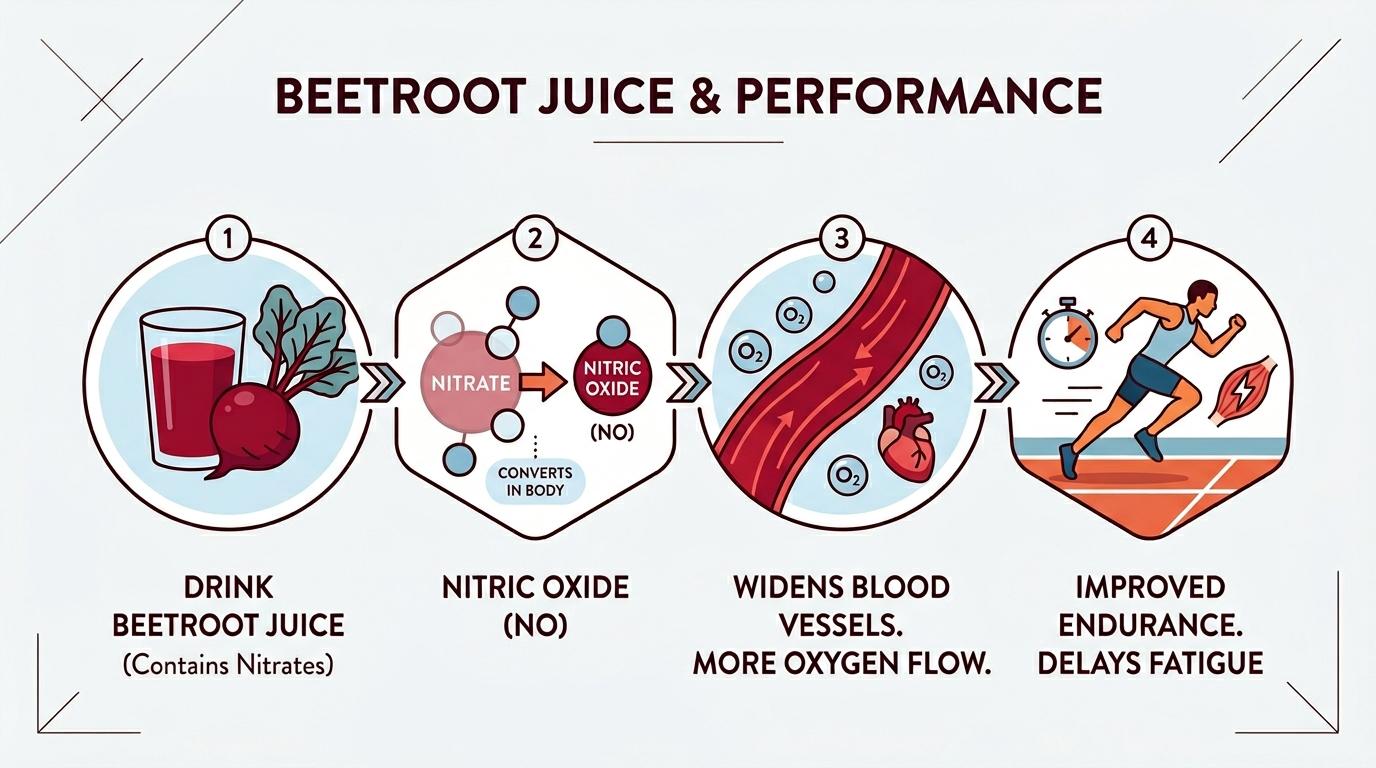
Beetroot juice has gained attention among athletes and fitness enthusiasts for its role in endurance and stamina. If you train regularly or want to improve workout output, understanding how beetroot juice improves exercise performance helps you make smarter nutrition choices.
This guide explains the science, benefits, timing, and practical usage so you get measurable results.
What Makes Beetroot Juice Effective?
Beetroot contains high levels of dietary nitrates. Once you consume it, your body converts nitrates into nitric oxide. This compound plays a key role in blood flow and oxygen delivery.
Key functions of nitric oxide:
-
Expands blood vessels
-
Improves oxygen efficiency
-
Supports muscle contraction
-
Reduces energy cost during exercise
This process explains why beetroot juice improves exercise performance in both endurance and high-intensity training.
How Beetroot Juice Improves Exercise Performance
1. Improves Oxygen Efficiency
When you exercise, your muscles need oxygen to produce energy. Beetroot juice reduces the oxygen required for the same workload.
What this means for you:
-
You perform longer before fatigue sets in
-
Your endurance improves over time
-
Your body uses energy more efficiently
This benefit is well-documented in endurance sports such as cycling and running.
2. Enhances Blood Flow
Nitric oxide helps relax and widen blood vessels. This increases circulation.
Impact on performance:
-
Faster oxygen delivery to muscles
-
Improved nutrient transport
-
Better muscle recovery between sets
Better blood flow directly links to how beetroot juice improve exercise performance in strength and cardio training.
3. Increases Stamina and Time to Exhaustion
Athletes often measure performance by how long they maintain effort before fatigue.
Beetroot juice has shown improvement in:
-
Time to exhaustion
-
Repeated sprint performance
-
High-intensity interval output
If your goal involves longer sessions or sustained intensity, this becomes a key advantage.
4. Supports Muscle Efficiency
Muscles require energy for contraction. Beetroot juice helps reduce ATP cost during exercise.
Result:
-
Less energy used for the same movement
-
Improved efficiency during repetitive actions
-
Better performance in endurance sports
This explains why many runners and cyclists include it in pre-workout routines.
5. Improves Recovery Between Efforts
During interval training or sports, recovery speed matters.
Beetroot juice helps:
-
Restore oxygen levels faster
-
Improve blood flow after exertion
-
Reduce perceived fatigue
This allows you to maintain consistent performance across multiple sets.
Secondary Benefits of Beetroot Juice
Beyond exercise performance, beetroot juice supports general health.
Cardiovascular Health
-
Helps regulate blood pressure
-
Supports heart function
Brain Function
-
Improved blood flow supports mental focus
-
Better oxygen delivery aids concentration
Antioxidant Support
-
Contains betalains
-
Helps reduce oxidative stress after workouts
These benefits make beetroot juice a strong addition to a performance-focused diet.
When to Drink Beetroot Juice for Best Results
Timing matters if you want to maximize performance.
Pre-workout timing
-
Drink 2 to 3 hours before exercise
-
Allows nitrate conversion into nitric oxide
Daily intake strategy
-
Consistent use improves results
-
Works better over days or weeks rather than a single dose
How Much Beetroot Juice Should You Take?
The effective dosage depends on nitrate content.
General guideline:
-
300 to 500 ml of beetroot juice
-
Or 400 to 800 mg of nitrates
Check labels if you use packaged juice or supplements.
Who Benefits Most?
Beetroot juice works best for specific types of athletes.
Ideal users:
-
Endurance athletes
-
Runners and cyclists
-
Football and cricket players
-
Gym users doing high-rep training
Less noticeable effects:
-
Short, explosive sports like powerlifting
-
Activities relying only on peak strength
Natural Sources vs Supplements
You have two main options.
Fresh beetroot juice
-
Whole food option
-
Contains additional nutrients
Beetroot powder or shots
-
More concentrated nitrates
-
Convenient for daily use
Choose based on your routine and consistency.
For those looking for a practical and precisely dosed option, beetroot nitrate shots designed for consistent daily intake can be a convenient alternative to fresh juice.
Possible Side Effects
Beetroot juice is safe for most people, though a few mild effects exist.
Common effects:
-
Pink or red urine
-
Slight digestive discomfort in some cases
These are normal and not harmful.
Practical Tips to Maximize Results
If you want real performance gains, focus on consistency and strategy.
Actionable tips:
-
Use beetroot juice regularly, not occasionally
-
Combine with proper hydration
-
Pair with a balanced pre-workout meal
-
Track your performance over time
-
Avoid relying on it without training discipline
Beetroot juice supports performance. It does not replace structured training.
FAQs
Does beetroot juice improve exercise performance for beginners?
Yes. Beginners often notice improved endurance and reduced fatigue. Effects vary based on diet and fitness level.
How long does it take to see results?
Some users notice changes within a few workouts. Stronger results appear after consistent use over one to two weeks.
Is beetroot juice better than pre-workout supplements?
It depends on your goal. Beetroot juice supports endurance and oxygen efficiency. Many pre-workouts focus on stimulation and energy.
Can you drink beetroot juice every day?
Yes. Daily intake supports consistent nitrate levels and better long-term performance benefits.
Does cooking beetroot reduce its benefits?
Yes. High heat reduces nitrate content. Fresh juice or minimally processed forms work best.

 English
 Arabic
 French
 Spanish
 Portuguese
 Deutsch
 Turkish
 Dutch
Dutch
 Italiano
 Russian
 Romaian
 Greek
Greek