
From Dojo to Daily Life: Why Japanese Martial Arts Are Winning Dubai’s Families
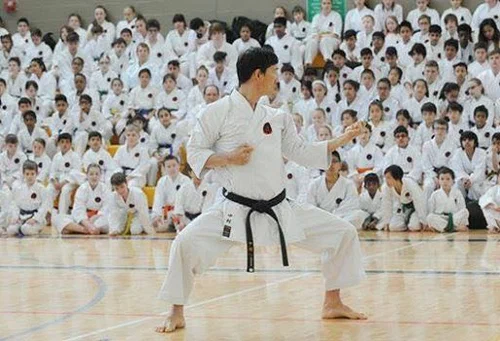
Dubai has become a global sports hub, and martial arts have grown right along with it. One clear signal: the city hosted the 25th WKF Senior World Karate Championships in November 2021, with reports citing more than 1,800 athletes and over 1,200 delegates and officials attending.
That momentum is why many residents now search for a japanese martial arts academy Dubai that offers more than fitness—something that builds character, confidence, and composure under pressure. The good news: quality training exists, but choosing well matters.
What “Japanese martial arts” really trains (beyond punches and kicks)
Japanese systems such as Karate, Judo, and Aikido are structured around repeatable practice and strong etiquette. That structure is not just tradition—it’s a teaching tool. Many programs blend:
- Foundational movement (stance, balance, breakfalls, footwork)
- Technical precision (timing, distance control, posture)
- Behavioral habits (calm breathing, respectful conduct, focus)
Research reviews on youth participation have reported that martial arts can be linked with positive social-psychological outcomes such as improved self-regulation and well-being—while also noting results depend heavily on the teaching style and setting.
Put simply, strong dojos don’t just teach techniques; they teach routines and standards students can carry into school, work, and daily life.
Choosing a reputable martial arts academy in Dubai: what to check first
Not every class that looks good on social media is well-run. When selecting a martial arts academy in Dubai, start with professionalism and compliance.
Dubai has a regulatory framework for sports establishments. For example, Executive Council Resolution No. (1) of 2020 defines “Sports Academies,” references permits, and notes the Dubai Sports Council’s role in areas such as standards and the registration of coaches/professional staff.
Practical signs of a well-managed school often include:
- Clear business licensing and transparent policies
- Coaches with verifiable credentials and a consistent curriculum
- Hygiene and safety basics (clean mats, first-aid readiness, water access)
As an example of facility expectations used in parts of Dubai, Dubai Aviation City Corporation’s OHSE Code of Practice for health clubs references having a valid trade license available, staff lists, and occupational health cards, plus general requirements like drinking water and first-aid supplies.
Kids’ programs: building confidence safely, not rushing contact
Parents looking for a martial arts academy for kids often want the same outcomes: better focus, better behavior, and a healthier routine. The best programs earn those results by matching training intensity to the child’s age and maturity.
Evidence in the research literature suggests martial arts-based training can support self-regulation in children, including school-based programs designed around traditional discipline and self-control.
A randomized field experiment on Taekwondo reported improvements in children’s self-regulation and explored how motivation and expectations can play a role.
Safety is part of quality—especially for sparring and falls. The American Academy of Pediatrics has reviewed youth participation and injury risk across martial arts and discusses how rules, supervision, and training recommendations shape safety outcomes.
Actionable tip for parents: Favor schools that spend real time on movement quality (balance, safe falling, controlled partner drills) before any hard sparring. That progression is a strong marker of responsible coaching.
What to expect from Japanese martial arts training in Dubai (a realistic class flow)
High-quality japanese martial arts training in Dubai tends to follow a predictable rhythm. That consistency helps beginners improve quickly without feeling lost.
A solid class often looks like this:
- Warm-up + mobility (joint prep, light cardio, coordination drills)
- Basics (stances, strikes, blocks, footwork, breakfalls)
- Skill of the day (one theme trained in depth)
- Partner work (timing and distance with strict control)
- Conditioning finisher (short, safe, scalable)
- Cool-down + reflection (breathing, posture reset, key takeaways)
When you tour a martial arts training center in Dubai, watch how coaches manage spacing, pair students, and correct technique. Calm structure beats chaos every time.
Adults and real-world readiness: self-defense that starts with awareness
Many adults join martial arts for stress relief and fitness—then stay because confidence grows steadily. This is also where self defense classes in Dubai can be valuable, especially when they train practical habits:
- Boundary-setting and verbal skills
- Awareness and early exit decisions
- Simple, high-percentage responses practiced under controlled stress
Self-defense education also has research support in certain settings. For example, a randomized trial of a sexual assault resistance program for university women reported reductions in sexual assault outcomes and improvements in self-defense self-efficacy and related measures.
A key takeaway: the most useful self-defense training is consistent, coached, and pressure-tested progressively—rather than a one-off session.
How to spot the best martial arts classes in Dubai (quick checklist)
If your goal is the best martial arts classes in Dubai, use a short, practical checklist before committing:
- Instructor clarity: Coaching is calm, specific, and corrective (not just cheering).
- Beginner pathway: You can explain the first 8–12 weeks in plain terms.
- Safety rules: Contact level is controlled; injuries are taken seriously.
- Class structure: A written curriculum exists (not random techniques each day).
- Culture: Respect is enforced; ego is not rewarded.
- Facilities: Clean mats, safe spacing, and basic emergency readiness.
- Progress tracking: You get feedback on what improved and what to train next.
Conclusion: pick consistency over hype, and progress will follow
The real value of martial arts classes in Dubai is what happens after a few months of steady practice: better posture, better fitness, calmer reactions, and more confidence in everyday situations.
Choose a dojo that treats safety, structure, and coaching standards as non-negotiable—and then commit long enough to feel the compounding effect. Two to three sessions a week for 90 days is often enough to see measurable changes in strength, coordination, and composure. With the right school, the dojo becomes more than a workout—it becomes a practice that supports daily life.

 English
 Arabic
 Spanish
 Portuguese
 Deutsch
 Turkish
 Dutch
Dutch
 Italiano
 Russian
 Romaian
 Portuguese (Brazil)
 Greek
Greek