
Telescopic Boom Lift vs Articulating Boom Lift
Let's be honest. Picking the right MEWP for a tricky site is rarely as simple as looking at a glossy spec sheet. You’ve got a team waiting, a tight deadline bearing down on you, and a site layout that probably looks absolutely nothing like the original architectural drawings. If you find yourself stuck deciding between a standard cherry picker and a telescopic boom lift, getting it wrong means paying for a plant that just sits idle by the site cabins. The choice always boils down to the physical realities of your specific job. Let’s cut through the standard sales jargon and look at what actually works when you're standing in the mud trying to get the job sorted safely and efficiently.
The Raw Power of the telescopic boom lift
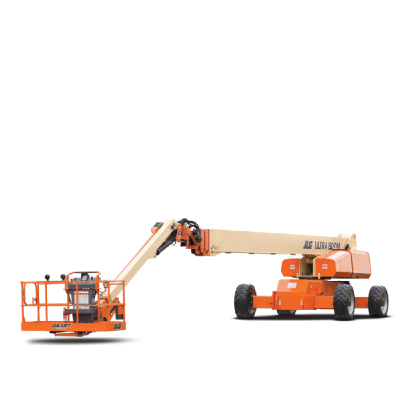
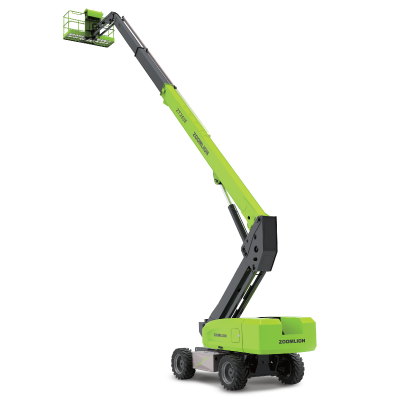
We often call this machine a straight stick on site for a very good reason. The mast sections simply slide directly out from the chassis in a straight line. It gives you a level of raw, horizontal outreach that no other elevating platform can even hope to match. Think about the logistics of bridging massive ground-level gaps. If your operators need to reach right over a deep excavation, safely bypass a fragile lower roof, or work across a busy dual carriageway without closing the road, this is the exact bit of kit you want. Because the boom doesn't feature heavy folding joints, these machines generally boast a much heavier safe working load in the basket. That means your steel erectors or cladding teams can take up significantly more materials and heavy tools in one go, drastically cutting down on the time wasted booming up and down throughout the shift.
The Up and Over Agility of an Articulating Boom
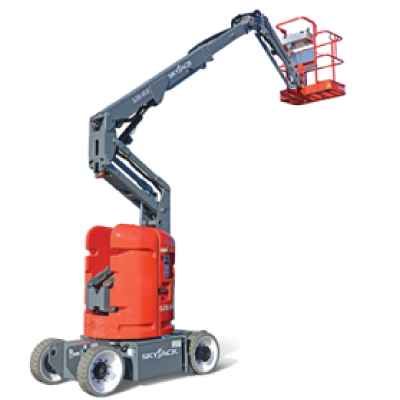
Then you have the articulating boom, which most lads on site just call a cherry picker. Instead of a single straight mast pushing outward, it features multiple hinged knuckles. This design completely transforms how you approach the workface. You aren't just driving the basket in a rigid straight line. You can actually bend the arm up, over, and neatly behind structural steelwork, existing pipe runs, or complex roof pitches. It is an absolute lifesaver on highly congested UK construction sites. Try getting a straight stick into a tight city centre fit-out or manoeuvring around established trees during a delicate heritage maintenance job. It just will not happen. The articulating machine gives you precise, highly flexible positioning when a direct line of sight to your working area simply does not exist.
Making the Right Call for Your Site Footprint
So, how do you make the final call without second-guessing yourself? You have to take a hard look at your ground-level barriers and the daily flow of site traffic. A telescopic boom lift becomes your best mate when you have plenty of wide-open space to park the heavy chassis, but you desperately need to reach a target miles away from the setup point. You park up securely on solid groundworks, drop the axles, and push the basket right out to the work area. Conversely, if your site is completely choked with plant, material skips, and other busy trades, an articulating boom is the only sensible choice. The base footprint is usually much more compact, and crucially, you do not need a massive tailswing radius to get the basket exactly where it needs to be. It sneaks smoothly into awkward, cramped spaces without causing a massive headache for everyone else working nearby.
Frequently Asked Questions
Q: Do both machines handle rough terrain well?
A: Yes, you can hire heavy-duty, rough-terrain diesel versions of both types featuring four-wheel drive and oscillating axles to easily handle deep site mud and deeply rutted ground.
Q: Which machine type allows you to go higher?
A: A telescopic boom lift generally takes the crown for maximum working height and sheer horizontal distance, making it the definitive go-to for massive commercial builds and tall bridge inspections.
Q: Is the IPAF ticket the same for operating both?
A: Absolutely, both machines fall neatly under the IPAF 3b Mobile Boom category, so one valid ticket covers your operators to drive and elevate both bits of kit.
Q: Can I get these for indoor or clean air zone work?
A: You certainly can, as the modern hire market is packed with high-performing electric and hybrid models that run cleanly and quietly for indoor warehouse maintenance or strict urban clean-air zone work.
Getting your teams up to height safely and efficiently should never be a massive gamble. Taking five minutes to properly assess your specific site constraints stops you from hiring the wrong machine and burning through your budget on completely wasted days. Whether you desperately need the massive horizontal reach of a straight stick or the nimble, up-and-over access of a knuckle boom, having a supplier who actually understands complex site logistics makes all the difference. For straightforward advice, transparent pricing, and a thoroughly maintained plant that turns up exactly when you need it, reach out to AFI Rentals — Powered access equipment hire, sales & training.

 English
 Arabic
 French
 Spanish
 Portuguese
 Deutsch
 Turkish
 Italiano
 Russian
 Romaian
 Portuguese (Brazil)
 Greek
Greek