
How can remote monitoring in renewable energy be enhanced by linking solar inverters via Ethernet converters
Solar energy systems now dominate the global transition to clean power. Modern solar farms generate massive amounts of data every second. Operators need this data to maintain efficiency and ensure stability. Early solar setups relied on manual inspections or local data logging. These methods are slow and prone to errors. Today, remote monitoring is the standard for the industry.
Engineers face a major challenge in data transport. Most solar inverters use the RS-485 serial protocol. This protocol works well for short distances inside a plant. However, it does not connect to the internet directly. To bridge this gap, technicians use specialized hardware. Linking inverters via an RS-485 to Ethernet Converter changes how we manage energy.
Reliable data flow is the backbone of any power plant. Without it, operators fly blind. A single failed inverter can go unnoticed for weeks in a manual system. This leads to massive revenue losses. Modern converters prevent these gaps by creating a constant stream of performance metrics.
Why Choose Ethernet Over Serial Connections?
Serial communication has physical limits. RS-485 cables can only run about 1,200 meters. Long cable runs often suffer from electromagnetic interference. This noise corrupts data packets from the inverter. Ethernet solves these physical distance problems. It uses existing local area networks (LAN) to move data across much larger spaces.
An RS-485 to Lan Converter acts as a data bridge. It takes the serial signal and wraps it in a TCP/IP packet. This process allows data to travel across global networks. Technicians can see inverter performance from thousands of miles away. This transition reduces the need for onsite staff.
Benefits of Ethernet Integration:
-
Faster Data Speeds: Ethernet handles higher bandwidth than serial wires.
-
Network Scalability: You can add hundreds of inverters to one network.
-
Remote Access: Login to the system from any web browser or mobile app.
-
Security: Modern converters support encrypted data transfers for safety.
-
Reduced Cabling: Ethernet allows for simpler wiring in large facilities.
Technical Mechanics of the RS-485 to Ethernet Converter
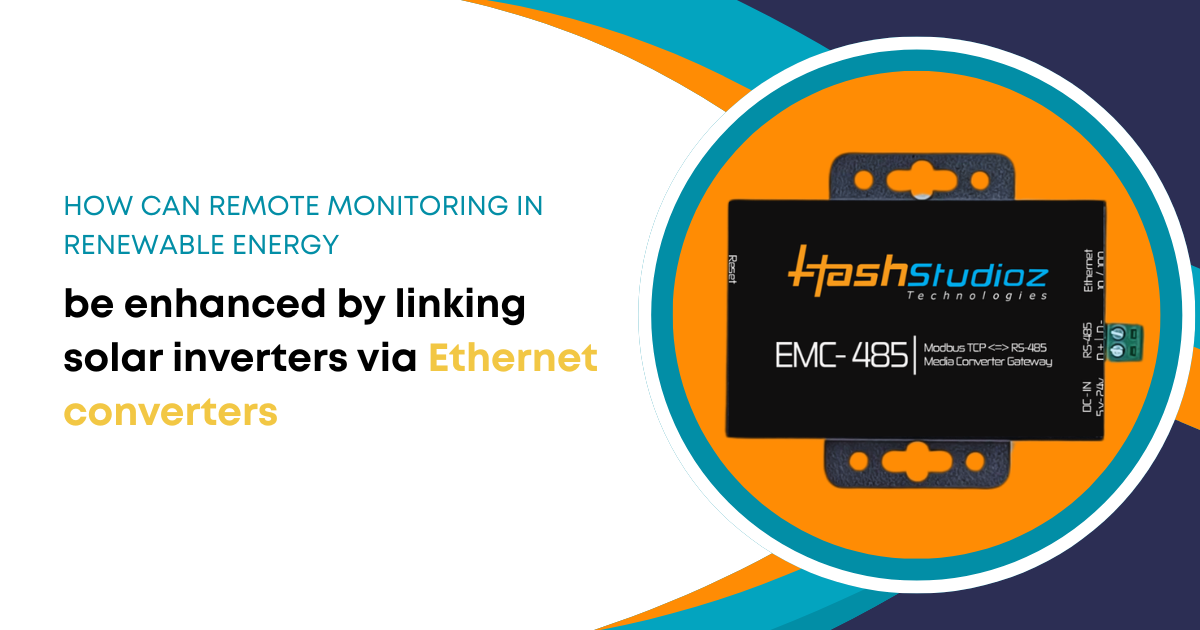
The converter functions as a vital gateway. It has an RS-485 port on one side for the inverter. The other side features an RJ45 Ethernet port for the network. The device uses a built-in microprocessor to convert protocols. It translates Modbus RTU signals into Modbus TCP. This translation is vital for modern monitoring software.
Most monitoring software expects data in a digital, networked format. The RS-485 to Ethernet Converter ensures the software gets what it needs. It provides a static IP address to each inverter group. This makes every component reachable on the corporate network.
The device handles timing issues between the two protocols. Serial data is slow and sequential. Ethernet data arrives in bursts. The converter buffers these signals to prevent data loss. This technical handshake ensures that every watt generated is recorded accurately.
Improving Reliability with Real-Time Data
Renewable energy output changes fast. Clouds can drop solar production by 70% in seconds. Operators must react to these changes instantly. Old serial systems have high latency. They might only update once every 15 minutes. This delay is too long for modern grid requirements.
Ethernet-based monitoring offers real-time updates. You get data in sub-second intervals. This speed allows for better management of the grid. High-speed data helps operators adjust inverter output precisely. It also helps in predicting energy storage needs for the coming hours.
1. Impact on Maintenance Costs
Traditional maintenance is reactive. You fix things after they break. Remote monitoring makes maintenance proactive. The system detects a falling string voltage before a total failure occurs. Statistics show that remote monitoring reduces operating costs by 20%. It also extends the life of the hardware by preventing overheating.
Data Security in Renewable Infrastructure
Cybersecurity is a major concern for energy grids. A simple serial connection has no built-in security. Anyone with physical access can tap the wire. Using an RS-485 to Lan Converter allows for advanced security layers. This is critical for national infrastructure protection.
You can place the solar plant behind a corporate firewall. You can use VPNs to access the data. Many converters now support TLS or SSL encryption. This protects the data from hackers during transit. Secure data ensures the integrity of energy billing. It also protects the physical equipment from malicious commands.
Scaling Large Solar Projects
Utility-scale solar plants cover hundreds of acres. Wiring every inverter back to a central office is expensive. Copper wire costs have risen significantly lately. Ethernet allows for a "star" network topology. This layout is much more efficient than old designs.
Instead of one long daisy chain, you use local hubs. Each hub uses an RS-485 to Lan Converter to send data over fiber optics. This reduces the total amount of copper needed. It also makes the system easier to repair. If one segment fails, the rest stay online. This modular approach is the only way to manage gigawatt-scale projects.
Statistics in Modern Solar Monitoring
The impact of digital monitoring is measurable and significant. Data-driven plants perform better than unmonitored ones.
|
Metric |
Serial Monitoring |
Ethernet/Cloud Monitoring |
|
Data Update Frequency |
5 - 15 Minutes |
1 - 10 Seconds |
|
System Downtime |
5% Average |
< 1% Average |
|
Mean Time to Repair |
48 Hours |
4 Hours |
|
Data Accuracy |
92% |
99.9% |
|
Signal Range |
1.2 Kilometers |
Unlimited via Web |
Industry reports show that 95% of new utility projects use Ethernet. The global market for these converters grows by 8% annually. This growth shows the industry's shift toward connected hardware. Efficiency gains often pay for the hardware in less than one year.
Integrating with Building Management Systems (BMS)
Commercial buildings often have their own control systems. These systems manage lights, HVAC, and security. Adding solar data to a BMS provides a full energy view. An RS-485 to Lan Converter makes this integration easy for engineers.
The converter allows the BMS to "talk" to the solar inverters. Facility managers can see how solar offsets their peak load. They can program the building to use more power when the sun shines. This reduces the strain on the public grid. It also maximizes the return on investment for the solar array.
Future-Proofing with Industrial IoT
The Internet of Things (IoT) is changing energy. Future inverters will likely have native Ethernet ports. However, millions of existing inverters still use RS-485. Replacing these inverters is too expensive and wasteful.
Using an RS-485 to Ethernet Converter gives old hardware new life. It brings legacy equipment into the modern IoT world. You can link these converters to AI-driven platforms. AI can predict failures before they happen. This helps managers plan for parts and labor well in advance. It turns a simple power plant into a smart energy asset.
Solving Common Installation Challenges
Installing these converters requires some technical skill. You must set the correct "Baud Rate" on the serial side. Common rates include 9600 or 19200. The IP settings must match the local network configuration. Incorrect settings will block all communication.
Technicians should use shielded cables for the RS-485 side. This prevents interference from the high-voltage power lines. Once configured, the RS-485 to Ethernet Converter requires very little maintenance. Most units have "watchdog" timers built in. These timers restart the device if it freezes or loses a connection.
Troubleshooting Steps:
-
Verify the polarity of the A and B wires.
-
Check the Slave ID of each connected inverter.
-
Ensure the gateway address is correct in the network settings.
-
Use a 120-ohm termination resistor at the end of the RS-485 chain.
-
Test the ping response of the converter from a remote PC.
Environmental Benefits of Remote Monitoring
Better monitoring leads to less waste of natural resources. When an inverter fails, clean energy is lost. The grid must then use gas or coal to fill that gap. Fast repairs keep more green energy on the wires. This directly supports carbon reduction goals.
Remote monitoring also reduces the carbon footprint of the repair team. Technicians do not drive to the site for simple resets. They fix software issues from the office. This saves fuel and reduces vehicle emissions over the long term. A smart grid is a green grid.
Advanced Data Logging Capabilities
Modern converters do more than just pass data. Many include local storage slots for SD cards. If the network goes down, the converter saves the data locally. Once the network returns, it uploads the missed data to the cloud. This prevents "black holes" in the performance history.
This feature is vital for financial reporting. Investors want to see every kilowatt produced. Gaps in data can lead to disputes or loss of subsidies. The RS-485 to Lan Converter ensures the record remains unbroken. It acts as a black box for the solar energy system.
Protocol Conversion and Interoperability
The energy world uses many different languages. Some devices use Modbus, while others use DNP3 or DLMS. An RS-485 to Ethernet Converter often handles multiple protocols. This allows different brands of equipment to work together.
Interoperability is a major hurdle in renewable energy. You might have inverters from one brand and meters from another. The converter acts as a universal translator. This flexibility allows owners to buy the best equipment regardless of the brand. It prevents "vendor lock-in" and keeps costs competitive.
Centralized Control for Multiple Sites
Large companies often own dozens of solar sites. Managing these as separate units is inefficient. Ethernet linking allows for a central command center. One team can monitor sites across an entire continent.
They use an RS-485 to Lan Converter at every location. The data flows into a single dashboard. This bird's eye view helps in identifying systemic issues. For example, if a specific inverter model fails at three different sites, the team can alert the manufacturer. This level of oversight is impossible with traditional serial connections.
The Role of Edge Computing in Solar
Edge computing moves data processing closer to the source. Some advanced RS-485 to Ethernet Converter units have edge features. They can analyze data locally before sending it to the cloud. This reduces the amount of data sent over the network.
By filtering out "noise," the converter only sends important alerts. For example, it might ignore small fluctuations but flag a sudden 10% drop. This saves bandwidth and reduces cloud storage costs. It makes the monitoring system much more intelligent.
Final Thoughts
Enhancing remote monitoring is a technical necessity for the 21st century. Linking solar inverters via an RS-485 to Ethernet Converter provides the best solution. It breaks the limits of old serial protocols. It brings speed, security, and scale to renewable energy systems worldwide.
The move to an RS-485 to Lan Converter saves money and time for everyone. It allows for a smarter, more responsive power grid. As solar power grows, these data bridges become even more important. Reliable data is the foundation of a clean energy future. Without these converters, the transition to green power would be much slower and more expensive. Investing in high-quality networking hardware is an investment in the planet.

 English
 Arabic
 Spanish
 Portuguese
 Deutsch
 Turkish
 Dutch
Dutch
 Italiano
 Russian
 Romaian
 Portuguese (Brazil)
 Greek
Greek