
Non-Surgical Treatments for Brain and Spine Disorders
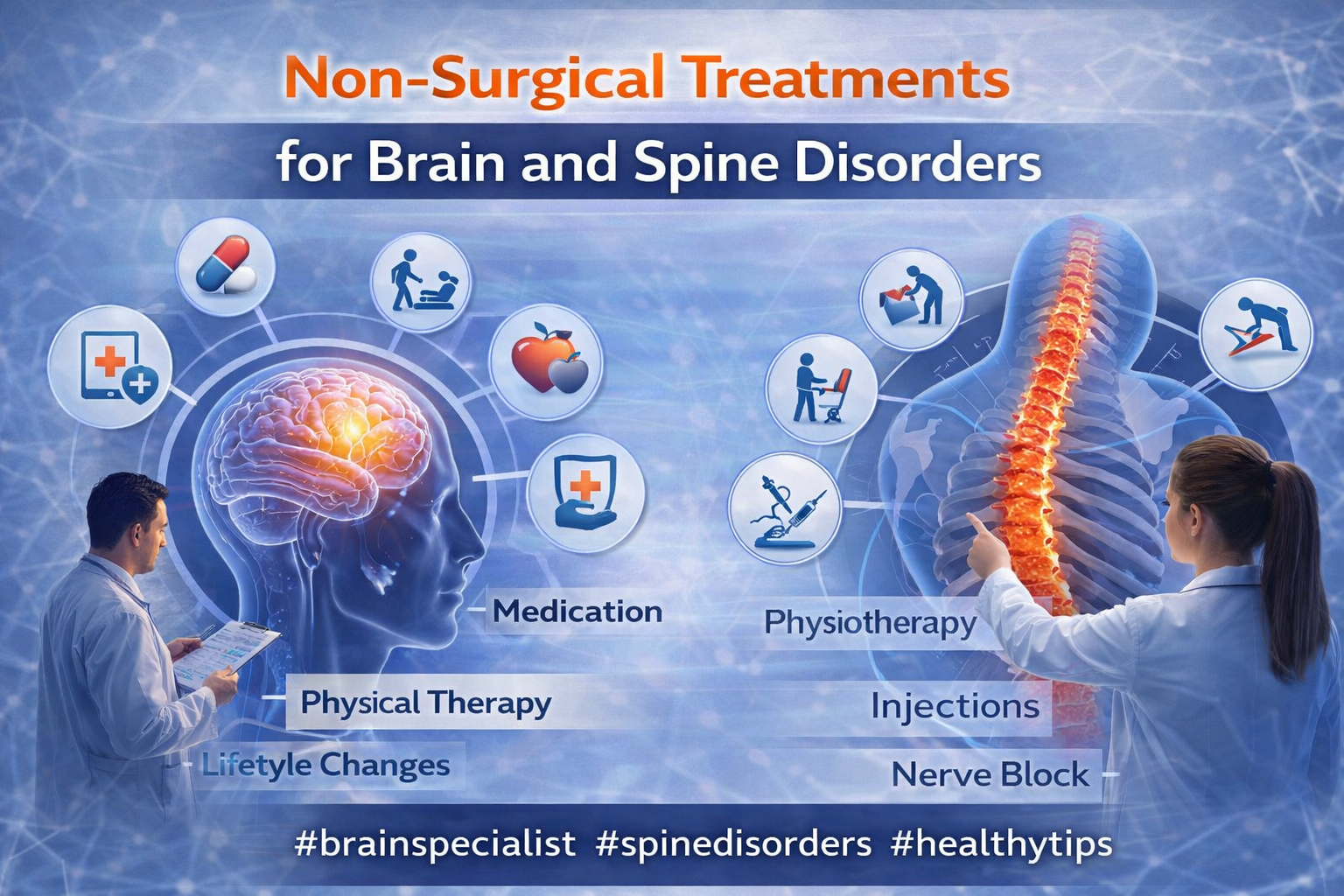
As a neurosurgeon, I meet plenty of patients who come in worried that any issue with the brain or spine will straight away mean going under the knife. The good news is that’s not usually the case. A lot of brain and spine problems can be handled very well without surgery. The idea is to start with the safest and simplest methods to ease pain, improve movement, and help people get back to their normal life. Surgery only comes into the picture when these other approaches aren’t working or when the condition is getting worse in a way that needs quicker action.
Medications – The Starting Point for Most Cases
For the majority of patients, we begin with medicines. Anti-inflammatory tablets like NSAIDs are often the first choice for reducing swelling and pain in slipped discs or spinal stenosis. When nerves are irritated and causing burning, shooting pain or numbness down the arms or legs, we use medicines such as pregabalin or gabapentin. For brain-related troubles like frequent headaches, migraines, or certain types of seizures, there are specific drugs that can keep symptoms under control. Muscle relaxants and short courses of steroids also help calm sudden flare-ups. The important part is picking the right medicine for the exact problem and checking how the patient is doing after a couple of weeks.
Physical Therapy and Rehabilitation
Exercise guided by a good physiotherapist makes a big difference in non-surgical treatment. A proper programme strengthens the muscles around the spine, corrects posture, and improves flexibility. For neck and back pain, we focus on core strengthening, gentle stretching, and hands-on techniques to take pressure off the nerves. In brain conditions – like after a mild stroke or when someone has balance issues – rehabilitation helps retrain the body to move better and regain coordination. Many people feel much better after regular sessions, especially when they also do simple exercises at home. Keeping weight in check and fixing bad posture habits are stressed because extra load on the spine can make things worse.
Interventional Pain Procedures
Sometimes tablets and exercises aren’t enough on their own. In those cases, targeted injections can give real relief. Epidural steroid injections put anti-inflammatory medicine close to the irritated nerve roots to reduce swelling from disc herniation or spinal narrowing. Facet joint injections or blocks help with pain coming from the small joints in the back. In selected patients, radiofrequency ablation can temporarily switch off pain signals from certain nerves. These are day-care procedures done under X-ray or ultrasound guidance and often provide relief for several months, giving the body time to heal on its own.
Lifestyle Adjustments That Actually Help
Small everyday changes can have a surprisingly strong effect. Regular low-impact activities like walking or swimming, getting decent sleep, and finding ways to manage stress all help bring down inflammation. For spine problems, a soft brace or neck collar is sometimes used for a short time to rest the area during bad pain episodes. In brain issues such as mild head injury or ongoing headaches, avoiding known triggers, drinking enough water, and eating a balanced diet support better recovery. Some clinics also offer non-invasive spinal decompression therapy – a gentle traction method that eases pressure on the discs and nerves.
When Non-Surgical Treatment Works Best
These methods are especially useful for degenerative disc disease, mild to moderate disc bulges, spinal stenosis without major weakness, long-standing neck or back pain, and many types of headaches that aren’t emergencies. Success depends on regular check-ups, watching for any new neurological signs like increasing weakness, numbness, or bladder problems, and repeating scans only when really needed.And in case something really does not improve further, or it starts deteriorating irrespective of conservative treatment measures, is the appropriate time to discuss an open procedure.
Every person’s condition is different, so the best plan is always made after a careful examination and looking at the scans. A proper assessment helps decide how far non-surgical treatment can take you.
If you’re facing any brain or spine issues, you can consult with a Neuro Expert doctor in Ranchi or look for best Neuro treatment in Ranchi from an experienced neurosurgeon and spine doctor like Dr Vikas at RIMS Ranchi. He can guide you on the most suitable way forward.
Most brain and spine disorders first receive treatment through non-surgical methods which typically provide optimal results for these conditions. The body receives its best opportunity to recover through conservative treatment because this method reduces all potential dangers. The main thing in this situation requires people to receive their assessments at appropriate moments while they follow their established treatment plan which needs assessment during scheduled times to allow necessary adjustments.

 English
 Arabic
 French
 Portuguese
 Deutsch
 Turkish
 Dutch
Dutch
 Italiano
 Russian
 Romaian
 Portuguese (Brazil)
 Greek
Greek