
How Pizza Flour Impacts the Quality of Authentic Pizza Dough
The texture, flavor, and structure of pizza dough depend heavily on the type of flour used during production.
Professional bakers know that inconsistent results often trace back to poor ingredient selection at the base level.
Choosing the right flour directly impacts dough elasticity, fermentation behavior, and final crust quality.
This blog explains why flour selection matters in commercial pizza production and what technical characteristics bakers should evaluate before committing to a supplier.
What Makes Flour Selection Critical in Commercial Pizza Production?
Pizza dough requires specific protein structures to develop gluten networks that can stretch without tearing.
Standard wheat varieties do not always deliver the consistency needed for high-volume operations.
Protein content, ash level, and milling precision determine how dough behaves during mixing, proofing, and baking.
When these factors align, the dough becomes easier to handle and more forgiving during production cycles.
Commercial operations benefit from stability.
Using the same flour batch after batch reduces variability in dough performance and allows teams to maintain standardized production timelines.
Understanding Protein Content and Gluten Development
Protein percentage directly affects gluten formation.
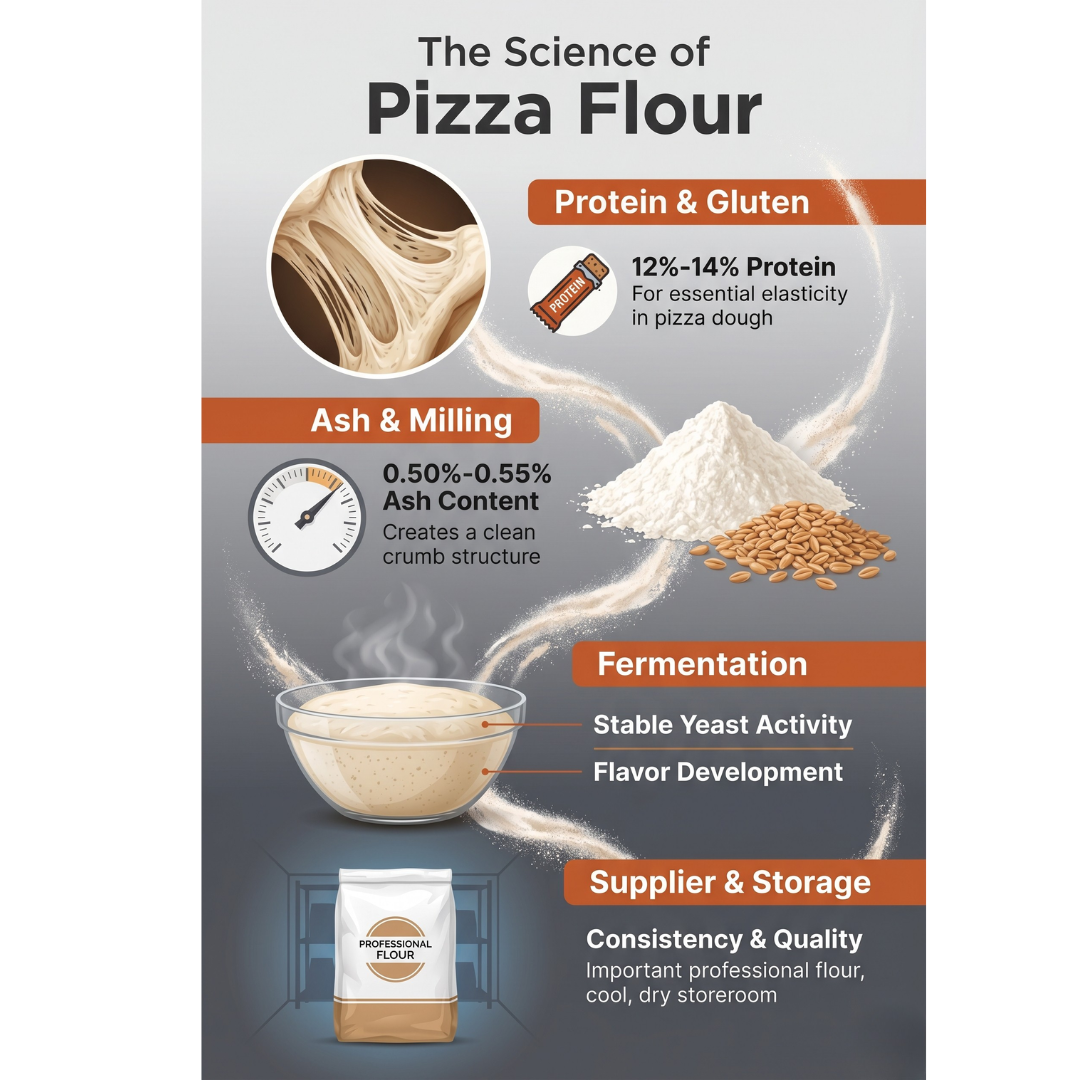
For pizza dough, a range between 12% and 14% typically delivers the extensibility required for thin crusts and the strength needed for thicker styles.
Higher protein levels support longer fermentation periods, which are common in Neapolitan and Roman pizza styles.
Lower protein content may suit faster production schedules but often sacrifices texture and chew.
Key Protein Considerations
-
Gluten strength for dough stretching and shaping
-
Tolerance to extended proofing times
-
Ability to hold gas during fermentation
-
Surface tension for proper crust formation
Consistency in protein levels across batches keeps production predictable.
Bakers who work with variable protein content face uneven dough behavior and have to adjust hydration or mixing times frequently.
The Role of Ash Content and Milling Standards
Ash content indicates the mineral composition left after burning a flour sample.
Lower ash content typically means a finer, whiter flour milled from the endosperm with minimal bran or germ inclusion.
Pizza flour with an ash content around 0.50% to 0.55% is common in professional settings.
This range strikes a balance between flavor complexity and clean crumb structure.
Milling standards also determine particle size and texture.
Finely milled flour absorbs water more evenly and produces smoother dough.
Coarser grinds may require longer hydration periods and can lead to inconsistent dough development.
Professional bakers should verify milling specifications with suppliers, especially when sourcing in bulk for daily production.
How Flour Type Influences Dough Fermentation
Fermentation is where flavor develops.
The type of flour used impacts yeast activity, enzyme action, and acid formation during proofing.
Refined white flours ferment predictably.
They provide simple sugars that yeast can consume at a steady rate, which is ideal for controlled production environments.
Higher extraction flours, which retain more bran and germ, introduce additional enzymes and nutrients.
These can speed up fermentation or alter flavor profiles, depending on ambient conditions and dough temperature.
Factors Influenced by Flour Type During Fermentation
-
Rate of yeast activity
-
Development of organic acids
-
Dough pH levels
-
Final flavor intensity
Bakers working with cold fermentation schedules should prioritize flours that tolerate long resting periods without over-proofing or weakening.
Matching Flour to Pizza Style
Different pizza styles demand different dough characteristics.
-
Neapolitan pizza requires a soft, elastic dough that bakes quickly at high temperatures.
-
Roman pizza benefits from a drier, crispier structure.
Using pizza flour designed for specific styles reduces trial and error.
A flour formulated for high-hydration dough will not perform the same way in a low-hydration recipe, and vice versa.
Professional bakers and chefs should align flour choice with the desired end product rather than defaulting to general-purpose varieties.
This approach improves consistency and reduces waste from failed batches.
Evaluating Supplier Consistency and Storage Conditions
Flour quality can degrade if stored improperly.Moisture, heat, and pests compromise both performance and food safety.
Professional kitchens & chefs should source from suppliers who follow strict storage protocols and provide batch traceability.
Knowing the milling date and origin of wheat helps predict how flour will behave in production. Large-scale operations benefit from establishing long-term relationships with suppliers. Consistent sourcing reduces the need for frequent formula adjustments and keeps production schedules stable.
Supplier Evaluation Checklist
-
Batch consistency over time
-
Storage and packaging standards
-
Transparent labeling of protein and ash content
-
Availability of technical support
Testing a small quantity before committing to bulk orders is a practical step. Running trial batches allows bakers to verify dough performance under real production conditions.
Practical Tips for Testing Flour in Production
-
Before switching to a new flour, run controlled tests to minimize production risk.
-
Prepare the dough using the same hydration level, mixing time, and fermentation schedule as your standard recipe to ensure accurate comparison.
-
Observe how the dough behaves during handling and shaping.
-
Carefully note any differences in elasticity, stickiness, and tear resistance.
-
Bake test samples at your regular oven temperature and evaluate crust color, texture, and overall flavor.
Small differences in flour composition can lead to noticeable changes in final product quality. If results meet or exceed your current standard, consider transitioning gradually. This minimizes risk and allows teams to adjust to any differences in dough behavior.
Conclusion
Flour selection shapes every stage of pizza dough production, from mixing to baking.
Protein content, ash level, and milling quality all contribute to dough performance and final product consistency.
Commercial bakers should evaluate flour based on technical specifications, supplier reliability, and compatibility with their production methods.
Testing before full-scale adoption reduces risk and supports quality control.
Choosing the right flour is not about following trends.
It is about matching ingredient characteristics to production goals and delivering consistent results across every batch.
FAQs
Q.1 What protein percentage is ideal for pizza dough in commercial baking?
Ans: A protein range between 12% and 14% works well for most pizza styles.
Higher protein supports longer fermentation and stronger gluten networks, while moderate levels suit faster production schedules.
Q.2 How does ash content affect pizza dough quality?
Ans: Lower ash content results in finer, whiter flour with cleaner crumb structure.
Ash levels around 0.50% to 0.55% are typical for professional pizza production and balance flavor with texture.
Q.3 Can I use the same flour for Neapolitan and Roman style pizza?
Ans: Different styles perform better with specific flour types.
Neapolitan pizza benefits from high-protein, finely milled flour, while Roman styles may require drier, lower-hydration formulations.
Matching flour to style improves consistency.
Q.4 How should commercial bakers store flour to maintain quality?
Ans: Store flour in cool, dry conditions away from direct sunlight and moisture.
Use airtight containers or sealed bags, and rotate stock to prevent aging.
Proper storage prevents spoilage and maintains dough performance.
Q.5 What should I test when evaluating a new flour supplier?
Ans: Run trial batches using your standard recipe.
Check dough elasticity, fermentation behavior, and final bake quality.
Compare protein and ash content across batches, and assess supplier reliability and storage practices before committing to bulk orders.

 English
 Arabic
 French
 Portuguese
 Deutsch
 Turkish
 Dutch
Dutch
 Italiano
 Russian
 Romaian
 Portuguese (Brazil)
 Greek
Greek