
The Light You Carry in Your Pocket: Rethinking What It Means to “Read” a Spiritual Life
Many of us have wondered what we’re really reaching for when we pick up our phones in a quiet moment. Is it a distraction? Connection? A small escape between responsibilities?
Or on rare occasions, is it something deeper?
There’s a familiar scene: you’re waiting in line, scrolling without quite knowing why. Or lying awake at night, the room dim, your thoughts louder than you’d like. In moments like these, we often turn to quick content, short videos, brief reflections or a few lines of something that feels meaningful but fades just as quickly.
It’s fascinating to consider how different it feels when, instead of skimming, we enter a life. Not a summary, not a list of insights, but a story that unfolds slowly, with all its tension, silence, and unexpected grace.
That shift from consuming ideas to encountering a life might be the most overlooked difference in spiritual reading today.
The Quiet Power of an Ordinary Life
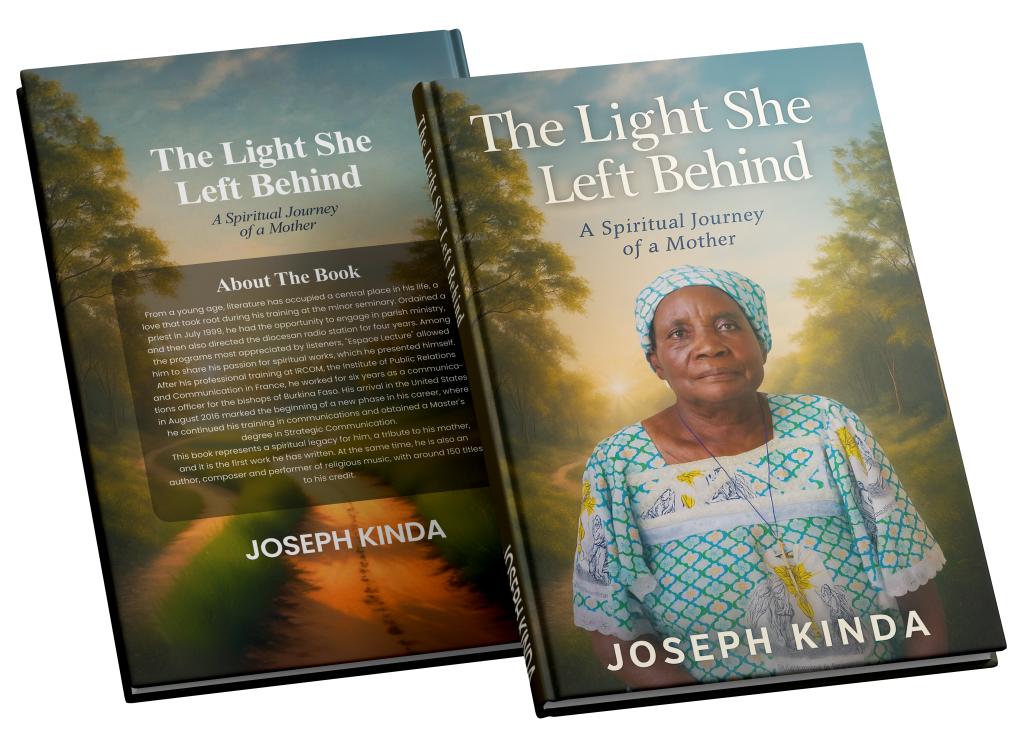
Take the story of Maria Goretti, not the widely known saint of the same name, but an ordinary mother whose life, at first glance, seems almost too simple to hold deep meaning.
No public platform.
No formal education.
No audience.
And yet, her life touches on themes that feel strikingly familiar: loss, misunderstanding, endurance and forgiveness.
Many of us have been taught to look for wisdom in polished voices, people who speak clearly, write persuasively, and package their ideas in ways that travel well across platforms. But there’s another kind of wisdom that doesn’t travel easily. It has to be lived with, sat beside, revisited.
Maria’s story unfolds not in dramatic speeches, but in decisions:
● Staying when leaving would have been easier
● Forgiving without being asked
● Continuing daily routines in the shadow of grief
It’s the kind of life that doesn’t announce itself but lingers.
The Difference Between Information and Formation
This is something many people quietly wrestle with: why does so much meaningful content leave us unchanged?
We can read dozens of reflections, listen to hours of sermons, or scroll through endless quotes and still feel the same at the end of the day.
There’s a subtle but important distinction here:
● Information tells us what is true
● Formation slowly reshapes how we live
And formation almost always takes longer. It resists shortcuts.
A life like Maria’s doesn’t offer quick answers. It doesn’t resolve tension neatly. Instead, it holds space for contradiction: faith alongside grief, endurance alongside exhaustion, love alongside difficulty.
In a world trained for immediacy, that can feel unfamiliar, almost uncomfortable. But it’s also where something deeper begins.
Why Digital Reading Feels Different When It Matters
At first glance, it might seem odd to connect something as grounded and tactile as a lived spiritual life with something as fleeting as a screen.
But think about how we actually live now.
We don’t encounter meaning only in quiet rooms with printed pages. We encounter it:
● In waiting rooms
● During commutes
● In brief pauses between responsibilities
The idea to boldly consider something like Buy eBook The Light She Left Behind Online isn’t just about format; it reflects a shift in where reflection happens.
Not in ideal conditions, but in ordinary spaces.
And strangely, that aligns with the very life being described.
Because if holiness or simply depth is truly “ordinary,” then it should be accessible in ordinary moments too.
Not staged. Not scheduled. Just… present.
The Loom We Don’t Notice
There’s an image that often appears in reflections on lived spirituality: the loom.
Threads crossing, some bright, some dark. Patterns form slowly, often invisibly.
Most of us, if we’re honest, try to remove the darker threads. We want coherence without tension, meaning without struggle. But real lives don’t work that way.
What’s striking about stories like Maria’s is not that suffering disappears; it doesn’t, but that it becomes integrated.
That’s a hard idea to accept.
It’s also one that many people misunderstand at first. It can sound like passive acceptance or quiet resignation. But it’s not that. It’s a kind of active fidelity continuing to show up, to act, to choose, even when clarity isn’t immediate.
In literature, you see echoes of this in characters who endure without spectacle. In history, in figures who shape others quietly rather than dramatically. Even in music, it’s often the unresolved note that lingers that gives a piece its emotional weight.
Why should spiritual lives be any different?
What We Often Get Wrong About “Inspiration”
There’s a common assumption that inspiration should feel energizing, even exhilarating.
But sometimes, the most lasting inspiration is quieter. It doesn’t rush; it settles.
It might look like:
● A new way of understanding patience
● A reframing of suffering that doesn’t diminish it
● A recognition that forgiveness can exist without acknowledgment
These aren’t ideas that trend. They don’t lend themselves easily to headlines or summaries.
But they stay.
And perhaps that’s the point.
Reading as a Form of Listening
What if we stopped thinking of reading, especially spiritual reading, as gathering ideas and started thinking of it as listening?
Not listening for answers, but for patterns.
Not for resolution, but for resonance.
A life like Maria’s doesn’t demand agreement or admiration. It invites attention.
And attention, when sustained, has a way of changing how we see everything else.
A Different Kind of Ending
There’s a quiet paradox in all of this.
We live in a time of unprecedented access to words, articles, reflections, commentary and endless streams of thought. And yet, some of the most compelling “texts” are still lives that were never written in the traditional sense.
Lives that don’t argue.
Don’t explain.
Don’t conclude neatly.
They simply remain.
So maybe the question isn’t whether we should read more, or even what we should read next.
Maybe it’s this:
What kind of life would feel worth reading if someone encountered it in fragments, the way we encounter everything else?
Because in the end, the most meaningful stories aren’t just the ones we carry on our screens.
They’re the ones we quietly begin to live.

 English
 Arabic
 French
 Spanish
 Portuguese
 Turkish
 Dutch
Dutch
 Italiano
 Russian
 Romaian
 Portuguese (Brazil)
 Greek
Greek