
Revenue Models for Food Delivery Apps: What Every Founder Should Know
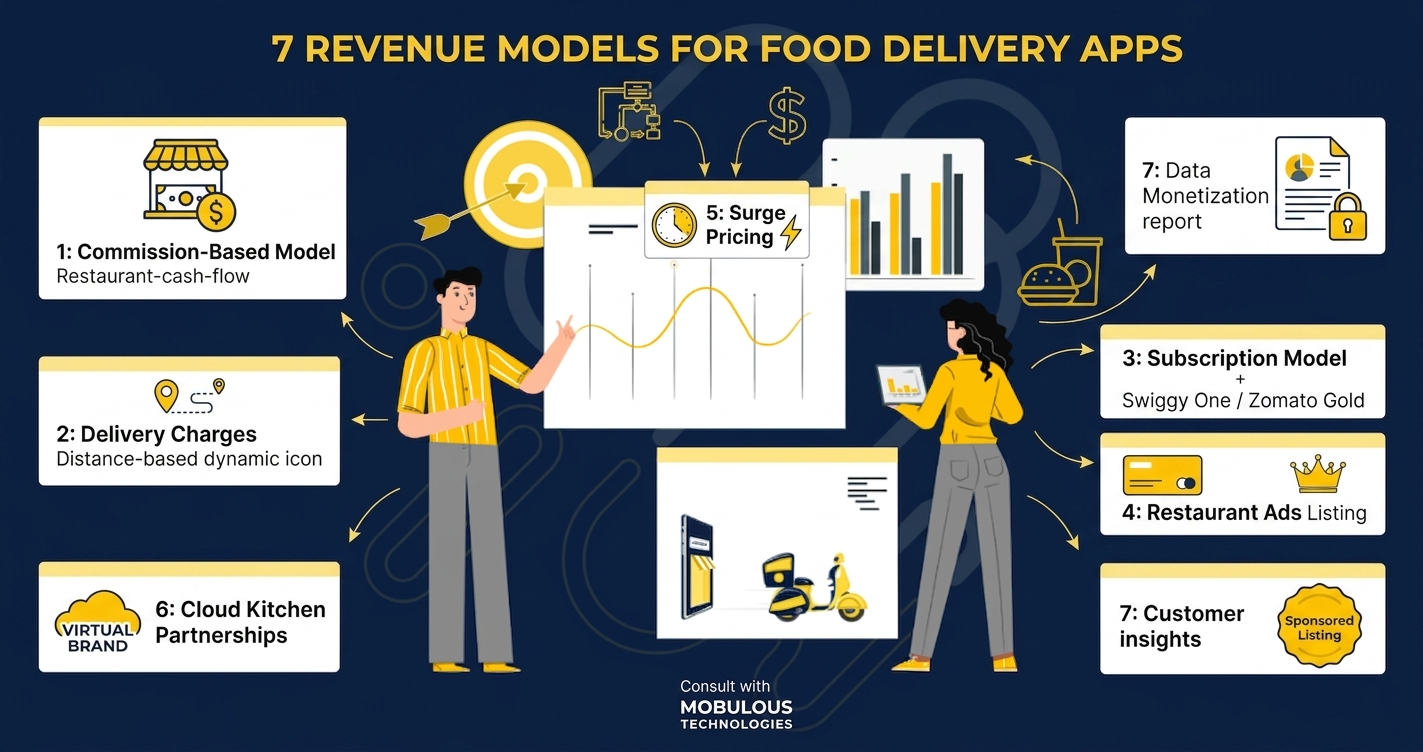
The food delivery industry has changed the way people order meals, and I’ve noticed one thing clearly: building a successful app is not just about getting downloads. The real challenge is creating a sustainable revenue model that keeps profits growing while users stay engaged.
If I were planning a food delivery startup, I would focus on monetization from day one. Many founders spend heavily on app development and marketing but struggle to recover operational costs later. That’s why understanding the right revenue streams matters before launching the platform.
We will explore, I’ll break down the most effective revenue models for food delivery apps and explain how successful platforms generate consistent income.
Why Revenue Models Matter in Food Delivery Apps
A food delivery app has multiple moving parts:
- Restaurants
- Customers
- Delivery partners
- Payment systems
- Marketing operations
Each of these areas creates expenses. Without a clear monetization strategy, scaling becomes difficult.
The best food delivery platforms combine multiple revenue streams instead of relying on a single source of income.
1: Commission-Based Revenue Model
This is the most common monetization strategy used by food delivery businesses.
In this model, the app charges restaurants a commission for every order placed through the platform. The percentage usually ranges between 15% to 35% depending on the restaurant agreement and delivery support.
Why It Works
- Generates recurring income
- Scales with order volume
- Encourages restaurant partnerships
Example
Apps like Uber Eats and DoorDash rely heavily on commission fees.
Important Tip
I believe founders should avoid charging extremely high commissions initially. Smaller restaurants may hesitate to join if profit margins become too tight.
2: Delivery Charges
Another strong revenue source is charging customers delivery fees.
These fees may vary based on:
- Distance
- Peak hours
- Weather conditions
- Order size
Many apps use dynamic pricing to increase delivery charges during busy hours.
Benefits
- Covers logistics expenses
- Improves operational sustainability
- Creates an additional profit layer
Some businesses also introduce “free delivery above a certain amount” to increase average order value.
3: Subscription Model
Subscription plans have become highly profitable in the food delivery market.
Users pay a monthly or yearly fee in exchange for:
- Free delivery
- Faster delivery
- Exclusive discounts
- Loyalty rewards
Popular Examples
- Swiggy One
- Zomato Gold
- Uber One
This model creates predictable recurring revenue while improving customer retention.
From my perspective, subscription-based services work best when the app already has strong daily order volume.
4: Restaurant Advertising and Sponsored Listings
Restaurants often compete for visibility inside food delivery apps.
That creates an opportunity for monetization through:
- Sponsored restaurant listings
- Banner advertisements
- Featured promotions
- Search result prioritization
Why Restaurants Pay for Promotions
Better visibility usually leads to:
- More clicks
- Higher orders
- Increased brand awareness
This model works especially well in highly competitive urban markets.
5: Surge Pricing During Peak Hours
Food delivery demand increases sharply during:
- Lunch hours
- Dinner time
- Weekends
- Festivals
Apps can increase delivery fees temporarily during these periods.
Advantages
- Balances delivery demand
- Encourages more delivery drivers online
- Improves profitability during rush hours
However, I think founders should use surge pricing carefully. Excessive charges may frustrate customers and reduce repeat orders.
6: Cloud Kitchen Partnerships
Cloud kitchens are delivery-only restaurants that operate without dine-in facilities.
Many food delivery platforms now partner directly with cloud kitchens or even launch their own virtual brands.
Revenue Opportunities
- Exclusive food partnerships
- Higher commission margins
- Better operational control
- Lower infrastructure costs
This model has become increasingly popular because it reduces dependency on third-party restaurants.
7: Data Monetization and Customer Insights
Food delivery apps collect valuable user behavior data such as:
- Ordering habits
- Preferred cuisines
- Peak ordering times
- Customer locations
Restaurants often pay for these insights to improve their marketing strategies and menu planning.
While this can be profitable, maintaining user privacy and data security should always remain a priority.
How to Choose the Right Revenue Model
If I were launching a food delivery startup, I would avoid depending on only one income source.
A balanced strategy could include:
- Restaurant commissions
- Delivery charges
- Subscription plans
- Sponsored listings
This creates stable cash flow while reducing business risks.
The ideal model depends on:
- Target audience
- City size
- Delivery network
- Competition
- Operational budget
Source of this content: CLICK HERE
Conclusion
The food delivery industry continues to grow rapidly, but profitability depends on choosing the right business model. I believe founders who combine multiple revenue streams have a much better chance of building a scalable and sustainable platform.
Whether it’s commissions, subscriptions, delivery charges, or cloud kitchen partnerships, every monetization strategy should support both customer satisfaction and long-term business growth.
If you are planning to build a food delivery platform, partnering with an experienced Food Delivery App Development Company can make the entire process smoother and more efficient. In my opinion, Mobulous Technologies is a leading mobile app development company that understands how to build scalable, feature-rich, and revenue-driven food delivery applications for modern businesses.
Also Read Our Latest Blog:

 English
 French
 Spanish
 Portuguese
 Deutsch
 Turkish
 Dutch
Dutch
 Italiano
 Russian
 Romaian
 Portuguese (Brazil)
 Greek
Greek